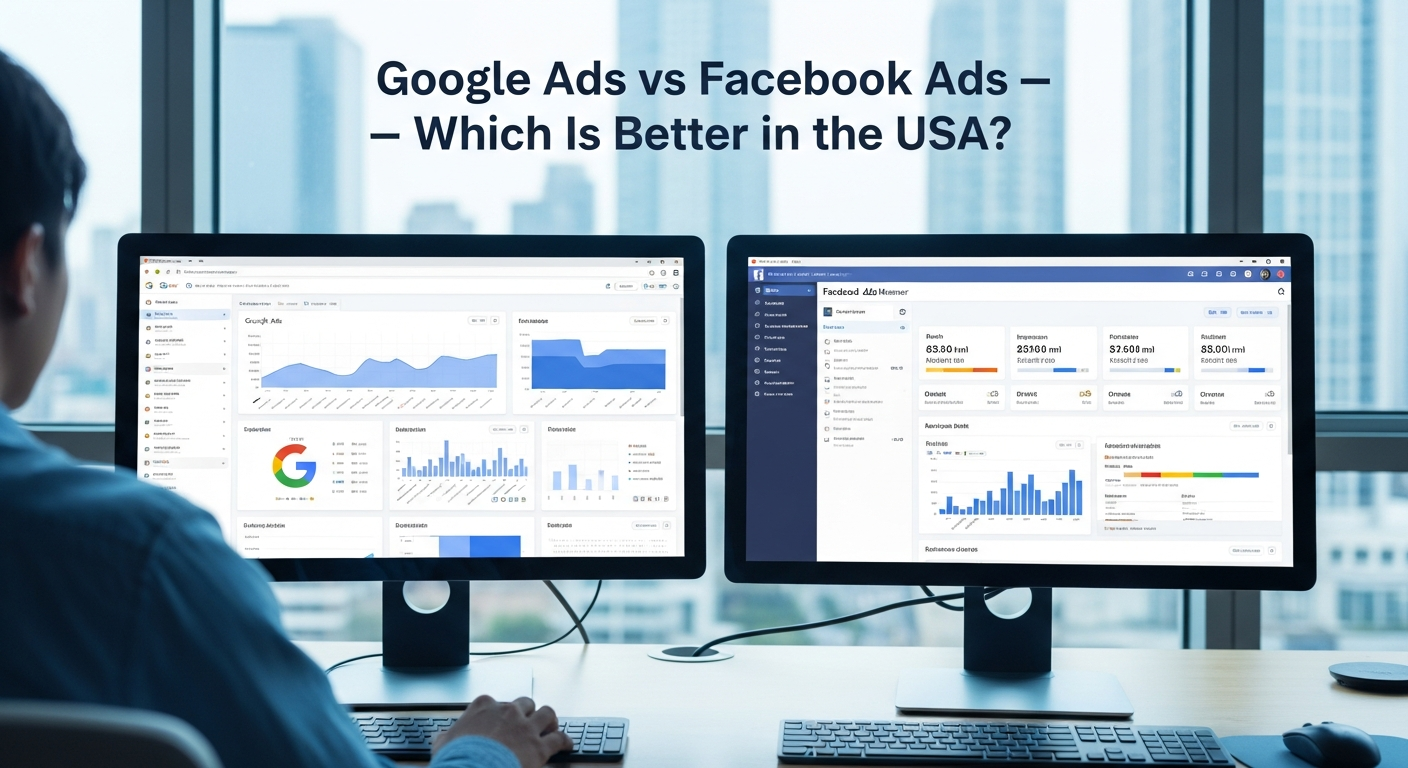
Google Ads vs Facebook Ads: Which Is Better for Your Business in the USA?
Are you a US business leader weighing the pros and cons of Google Ads vs Facebook Ads? Do you wonder which paid advertising platform will bring the most leads, ROI, and growth in America’s competitive market? With budgets tightening and choices multiplying, picking the right channel for your digital ad campaigns can be overwhelming. In this comprehensive guide, you’ll discover the hard data, expert insights, and actionable steps to master Google Ads vs Facebook Ads for your US business. We’ll break down targeting, costs, performance metrics, and ROI to empower your next move—plus real-world campaign strategies tailored for American audiences. Whether you run a local shop or manage an international brand, this guide will help you build a winning paid campaign strategy that turns clicks into customers.
Google Ads vs Facebook Ads: Why This Decision Matters for American Businesses
Choosing between Google Ads and Facebook Ads isn’t just a matter of preference. It’s about maximizing every dollar in your online advertising platforms and reaching your ideal audience at the right time. American consumers are unique: their buying journey often starts with a search and continues on social media. Top digital marketing services providers integrate both, but success starts with clarity about what each offers.
The Core Differences: Search Ads vs Social Media Ads in the USA
To decide on Google Ads vs Facebook Ads for US businesses, you need to understand their DNA.
- Google Ads (formerly AdWords) is the world’s largest paid search marketing platform. Ads appear atop Google search results, YouTube, Maps, and partner websites, targeting users actively looking for a solution.
- Facebook Ads (Meta Ads) run across Facebook, Instagram, Messenger, and Audience Network. You reach users based on detailed interests, demographics, and online behavior—for both outbound and retargeted messaging.
In essence: Google Ads capture demand (search), while Facebook Ads generate demand (social). For US businesses, blending intent with interest is critical.
Market Reach and User Demographics: USA Data 2024
- Google: Over 246 million unique US visitors each month. The vast majority of search traffic originates from Google. Key for local and international B2C/B2B buying decisions.
- Facebook: 186 million monthly US users, skewing slightly female and 25-54. Instagram adds 143 million more. Strong for brand awareness and visual storytelling (content marketing).
Most Americans touch both platforms weekly, but their intent differs at each touchpoint.
Cost Comparison: Google Ads vs Facebook Ads Investment in the USA
Your PPC advertising budget is precious. Let’s compare average costs for US advertisers across both platforms, summarized from SEMrush and Moz studies (2023-2024):
- Google Ads: US average cost-per-click (CPC): $1.63 – $4.70 (search). For competitive niches (legal, finance), CPC can reach $40+ in some US states. Display ads are cheaper ($0.50 – $1.00).
- Facebook Ads: US average CPC: $0.94. Cost-per-thousand impressions (CPM): $12.47. Instagram campaigns are similar or slightly higher. Costs vary by targeting and ad quality.
In general, Facebook Ads offer lower initial costs, but Google Ads often deliver faster conversions for high-intent searches. The PPC management services you choose should monitor results closely, as auction costs fluctuate in real time.
Budget Efficiency: Which Platform Yields Better ROI for US Advertisers?
The ongoing debate—Google Ads vs Facebook Ads for US businesses—comes down to return on investment (ROI). According to Think with Google and Moz:
- Average Google Ads ROI: US businesses make $2 for every $1 spent (Google estimate). Some verticals achieve $7-10 return per $1 (eCommerce).
- Facebook Ads ROI: Typical US business ROI is $4 for every $1 spent, though highly optimized campaigns and creative can outperform even Google.
But here’s the catch: ROI varies by industry, audience, and campaign strategy. For local US businesses (restaurants, services), Google’s local SEO services and ads can outperform Facebook in terms of leads and walk-ins. Meanwhile, fashion, lifestyle, and B2C brands may see lower costs per lead on Facebook or Instagram.
When to Use Google Ads vs Facebook Ads: Real-World US Business Scenarios
Google Ads: Best Paid Advertising Platform for US High-Intent Search
- Local businesses (plumbers, dentists, attorneys) can attract Americans ready to make a booking now with Google Search and Google My Business optimization.
- International B2B providers leverage Google Ads to capture US buyers researching specific solutions or suppliers.
- eCommerce stores get sharper sales performance with Google Shopping and remarketing via Display Network.
Facebook Ads: Best for Brand Discovery, Retargeting, and Hyper-Targeting in the USA
- Lifestyle, wellness, retail, and direct-to-consumer brands can inspire discovery and repeat purchases across Facebook and Instagram.
- Brands building communities (fitness, education, SaaS) use social media ads for engagement and retargeting.
- Event promotion and lead generation see lower costs through interest-based audience building.
For many US businesses, a hybrid approach is most powerful: start with Google Ads to capture search intent, use Facebook Ads to nurture relationships and spark discovery, then retarget with social media marketing for brand lifts.
Ad Targeting and Personalization: Who Wins for US Audiences?
Effective digital ad campaigns rely on precise targeting. Here’s how they compare:
-
Google Ads targeting:
- Keywords: Bid on what Americans type into search bars.
- Location: Target down to US ZIP codes, cities, or custom areas.
- Demographics: Layer by age, gender, device, or household income.
- Intent-driven: Reach users ready to buy or inquire.
-
Facebook Ads targeting:
- Interests and behavior: Tap into American users by hobbies, job titles, or browsing.
- Custom and lookalike audiences: Retarget past visitors or find similar high-value prospects.
- Advanced retargeting: Follow users across Facebook, Instagram, Messenger, and third-party apps.
For local targeting, both offer robust options—but Facebook’s audience tools can be more granular, especially if you have detailed USA customer personas. Explore targeting synergies via social media management and SEO services to get the best of both worlds.
Creative Formats and User Experience: What Performs in the US Market?
Both platforms allow you to test multiple creative ad types tailored for American consumers:
- Google Ads: Text ads (headlines, callouts), product listings, responsive search ads, video ads on YouTube, display banners across the web.
- Facebook Ads: Image ads, video ads, carousel, slideshow, instant experience. Instagram Reels and Stories are huge for younger US audiences.
US-centric web design and landing page optimization are essential—every click should land on a fast, mobile-first site designed for conversion. Data from SEMrush shows professionally crafted landing pages increase US conversion rates by 15-50%.
Measuring Success: Tracking Google vs Facebook Advertising ROI
Google Ads vs Facebook Ads campaigns require distinct measurement strategies for US businesses:
- Google: Focus on conversion rate, cost per acquisition (CPA), and lifetime value of US customers. Monitor click-through rate (CTR) and Quality Score for better ad placements.
- Facebook: Track cost per lead, ROAS (return on ad spend), engagement, and attributed sales. Creative testing is vital; Facebook’s algorithm rewards high-performing visual content.
For deeper insight, integrate Google Analytics and Facebook Pixel across your campaigns. Partners like Digitalsourcers.com can help you unify reporting for smarter data-driven decisions.
Case Study: Local Restaurant in New York City
A popular NYC restaurant used Google Ads for immediate table bookings, combining it with local SEO to dominate “best brunch in Manhattan” searches. Simultaneously, they ran Facebook Ads showcasing weekend specials and user-generated photos. The blend delivered a 74% boost in reservations compared to Facebook alone and reduced total advertising CPC by 22%.
Crafting a Winning Paid Campaign Strategy for American Businesses
- Identify objectives: Sales, leads, brand lift, or awareness? Match platform to intent.
- Build cohesive messaging: Align your ad creative and offer across platforms for a seamless US experience.
- Test and optimize: Regularly review campaign data, split-test audiences, and creative for both Google Ads and Facebook Ads.
- Lean on expert partners: Work with professionals (see our client portfolio) to save money and maximize ROI.
With reputation management, Google My Business optimization, and expert PPC campaign management, even small and mid-sized US companies can compete with industry giants.
Key Things to Know Before You Begin
- Google Ads vs Facebook Ads for US businesses is not a binary choice. Blending search and social can amplify your reach and ROI in the American digital landscape.
- Test regularly: Both platforms require ongoing optimization, especially as US auction prices and algorithms shift rapidly.
- Know your audience: Understanding US consumer intent, behaviors, and local trends is critical for paid campaign strategy success.
- Results depend on expertise: Partnering with experienced digital marketers (like Digitalsourcers.com) ensures smarter spending and higher returns.
Frequently Asked Questions
-
Which is cheaper for US businesses: Google Ads or Facebook Ads?
Generally, Facebook Ads offer lower CPC and CPM for most US industries. However, Google Ads might produce quicker, higher-value conversions for searches with strong purchase intent. Actual costs will depend on your targeting, industry, and ad quality. -
Can I use both Google Ads and Facebook Ads for my American business?
Absolutely. Many leading US brands maximize ROI by combining the high intent of search ads with the reach and engagement of social media ads. A strategic cross-platform approach is often the best paid advertising platform for USA-focused campaigns. -
How do I measure ROI for Google Ads vs Facebook Ads?
Use integrated reporting: track conversions, CPA, and revenue attribution for both platforms. Google Analytics and Facebook Pixel let you analyze the entire customer journey. Focus on metrics aligned to your business goals. -
Do I need an agency to succeed with online advertising platforms in the USA?
While solo efforts can work in simple markets, complex US industries benefit greatly from professional partners, such as Digitalsourcers.com. Agencies offer strategic planning, ongoing optimization, and integrated reporting—often at a fraction of the cost of doing it in-house.
Next Step: Take Action Today
Ready to drive more leads and sales with a custom-tailored paid campaign strategy for your American business? Contact Digitalsourcers.com today to speak with a digital advertising expert and unlock the full potential of Google Ads vs Facebook Ads in the USA. Discover how our digital marketing services can help your business rise above the competition.
Conclusion
Mastering Google Ads vs Facebook Ads is mission-critical for any US or international company seeking growth in the American market. Each platform offers unique advantages—and, when combined strategically, can deliver exponential brand reach and conversions. By focusing on clear goals, precise targeting, creative testing, and data-driven optimization, you can maximize your advertising ROI and win American customers faster. Let Digitalsourcers.com be your trusted partner for all things digital marketing, SEO, PPC advertising, and beyond. Your success story in the USA starts now.
table of content
Contents
hide