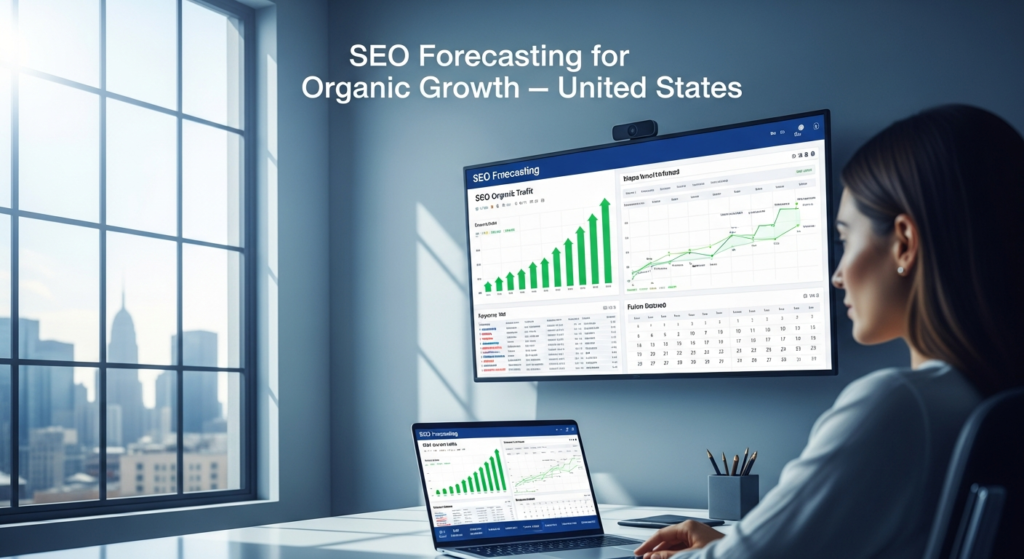
Are you struggling to confidently plan your company’s next big moves in organic search? Most businesses are. SEO can feel unpredictable—search engine algorithms change, competitors invest in content, and traffic forecasts often miss the mark. Yet in 2024 and beyond, having reliable, data-driven predictions is essential for businesses aiming for scalable organic growth. That’s where SEO forecasting comes in. In this comprehensive guide, you’ll discover how SEO forecasting can transform your digital marketing strategy, help you set achievable goals, and empower your team to make smarter investments for measurable business impact. Read on and learn how to take control of your search destiny.
What Is SEO Forecasting? Understanding the Basics
SEO forecasting is the process of predicting future organic search performance based on historical data, current trends, and digital marketing insights. By using advanced analytics tools, models, and traffic forecasts, businesses can estimate future website visits, rankings, conversions, and potential revenue from organic search.
The result? Organizations no longer make decisions based on guesswork. Instead, they leverage keyword forecasting, ranking prediction, and scenario planning to drive organic growth while minimizing risk.
Why SEO Forecasting Matters to International Businesses
Global companies often face complex digital landscapes—multiple markets, languages, and competitors. SEO forecasting gives these businesses the clarity needed for precise traffic forecasts across different regions or verticals. Whether you’re targeting the United States or expanding into new international markets, accurate projections mean strategic investments and faster market adaptation.
- Clarifies realistic traffic and revenue targets
- Supports digital marketing ROI analysis by channel and country
- Guides content and resource allocation for organic growth
- Reduces wasted spend by aligning SEO, SEM, and web design priorities
SEO Forecasting vs. Traditional SEO Analytics
Traditional SEO metrics show you what happened—traffic, clicks, and positions in the past. SEO forecasting takes the next step: projecting what will happen if you invest in new keywords, content, or SEO services. While analytics are essential, only a forward-looking forecast lets you plan for true organic growth.
How Does SEO Forecasting Work? Core Elements Explained
Modern SEO forecasting combines data science, machine learning, and market research. Let’s break down the essential components that go into an actionable ranking prediction.
1. Traffic Forecast Models
At its core, SEO forecasting begins by analyzing historical traffic patterns from analytics platforms like Google Analytics or Search Console. The goal: create a data-driven model that projects how organic sessions will change over time. Forecast models can be simple (moving averages) or advanced (time-series, regression, or AI-based).
- Factor in seasonal trends (e.g., holiday spikes)
- Adjust for algorithm updates or SERP changes
- Model expected results of content campaigns or keyword targeting
2. Ranking Prediction & Scenario Simulation
Next, ranking prediction tools estimate your future positions for priority keywords based on changes in your strategy (content, link building, technical SEO). Scenario simulations let you see—before spending budget—how rankings and organic growth might shift if you publish a set of new blog posts or launch a major product page.
These insights are especially crucial for businesses looking to outperform competitors in high-value markets like the United States, where search intent and competitor targeting constantly evolve.
3. Keyword Forecasting for Maximum ROI
Keyword forecasting evaluates the possible traffic and revenue you could achieve from ranking improvements on specific phrases. Not all keywords are created equal; forecasting pinpoints which search terms offer the greatest opportunity for new leads and conversions.
Tools like Ahrefs, Moz, or SEMrush provide monthly search volume, click-through rate (CTR), and ranking difficulty—but expert analysis goes deeper. By combining data from internal sources and industry benchmarks, agency partners like Digitalsourcers.com provide custom keyword forecasts aligned with your business goals.
4. Multi-Channel Data Integration
To get an accurate traffic forecast, integrate data from other marketing channels (SEM, social media marketing, content marketing, web design changes, etc.). This holistic view lets you align investments across organic and paid search. For example, a drop in paid search spend could impact overall site traffic—your forecast should capture this ripple effect.
Real-World Examples: SEO Forecasting Drives Tangible Results
Let’s look at real use cases where SEO forecasting changed the game for global brands:
- US SaaS Provider: By forecasting a 30% YoY increase in non-brand organic traffic through strategic keyword forecasting and content optimization, they confidently invested in new city-targeted landing pages. End result: 33% actual growth, $1.2M incremental revenue.
- International Retail Chain: Traffic forecasts identified underperforming product categories. Refocusing content and local SEO campaigns (see local SEO services) resulted in a 24% jump in organic transactions during a 6-month launch phase.
- B2B Manufacturer: Ranking prediction showed they could capture 65% more middle-funnel leads by prioritizing low-competition keywords in technical whitepapers, proving ROI to the C-suite.
These examples prove that with precise traffic forecasts and scenario modeling, businesses can justify SEO investments before allocating resources, avoid wasted spend, and accelerate organic growth.
Best Practices: Building an Effective SEO Forecasting Strategy
How can you ensure your approach matches the sophistication of top agencies and delivers real value? Here’s a step-by-step guide:
- Establish clear KPIs. Define the business outcomes you want: traffic, conversions, leads, or revenue.
- Leverage multiple data sources. Combine Search Console, Google Analytics, external keyword research, and CRM data for stronger forecasts.
- Use dynamic models—not static spreadsheets. Deploy forecasting tools that update automatically with new data and algorithm signals.
- Segment by region, language, and service line. A separate traffic forecast for the United States or new markets avoids one-size-fits-all projections.
- Validate with real-world tests. Regularly compare predicted versus actual traffic and ranking to refine your models.
- Integrate with SEM, social, and reputation management. Ensure forecasts account for the impact of search engine marketing, PR campaigns, and even Google My Business optimization.
For businesses with aggressive growth targets, working with a seasoned agency like Digitalsourcers.com offers competitive advantages: advanced forecasting capability, industry benchmarks, and a proven record of organic growth for international clients.
Common Challenges in SEO Forecasting—and How to Overcome Them
Despite its power, SEO forecasting comes with hurdles. Here’s what to watch for:
- Data quality issues. Incomplete or outdated analytics skew projections. Ensure a clean data pipeline.
- Search algorithm volatility. Forecasts should anticipate updates or adjust rapidly afterward.
- Competitor unpredictability. Use competitive intelligence and scenario planning.
- Resource allocation. Overestimate effort or budgets, or underinvest in content and technical SEO, can derail results.
- Poor cross-channel alignment. Integrate your planning with SEM, social media marketing, and web redesigns for a full view of potential traffic impact.
By partnering with experts and using intelligent models, you can minimize disruptions and keep your growth strategy on track.
SEO Forecasting Tools and Technology for 2024
With rapid advances in data science, today’s forecasting is smarter and more accessible than ever. Consider these tools for your next digital marketing project:
- SEO software suites: Platforms like Moz Pro, SEMrush, and Ahrefs offer integrated ranking prediction, keyword forecasting, and competitor monitoring modules.
- Custom dashboards: Use Google Looker Studio or Tableau for real-time traffic forecast visualizations and cross-channel integration.
- AI & machine learning: Emerging tools analyze millions of signal points (including voice and video marketing impact) to generate more accurate forecasts, even in dynamic international markets.
The right combination of software, expertise, and industry insight ensures your organic growth planning is robust, flexible, and always one step ahead.
Key Things to Know Before You Begin
- SEO forecasting transforms raw search data into actionable plans, enabling companies to predict and accelerate organic growth with confidence.
- Effective SEO forecasting is much more than keyword tracking—it incorporates traffic forecasts, ranking predictions, and real financial modeling.
- Integrating forecasting across channels (SEO, SEM, social, content, local SEO, and reputation management) ensures your investments drive enterprise-wide results.
- Working with a global digital marketing partner like Digitalsourcers.com gives businesses a competitive edge through advanced tools and proven experience in the United States and beyond.
Frequently Asked Questions
- What is SEO forecasting and why is it important?
SEO forecasting is the practice of predicting future organic search performance based on historical and current data. It’s crucial because it allows companies to strategically plan budgets, content, and resource allocation for maximum organic growth, avoiding the guesswork of traditional SEO tactics. - How does keyword forecasting improve my SEO strategy?
Keyword forecasting identifies which search terms offer the best opportunities for traffic and conversions, prioritizing them in your content calendar. This data-driven approach ensures your SEO efforts deliver measurable, ROI-positive results. - What challenges can I expect when predicting organic traffic growth?
Common pitfalls include data gaps, changing search algorithms, and unexpected competitor actions. Reliable models, regular validation, and cross-channel integration help overcome these issues. - Can SEO forecasting be applied to local SEO and other digital marketing channels?
Absolutely. SEO forecasting is adaptable for local SEO, social campaigns, reputation management, and even paid search, delivering a unified growth map across all your digital marketing efforts.
Next Step: Take Action Today
Ready to unlock your true organic potential? Partner with Digitalsourcers.com for advanced SEO forecasting, tailored digital strategy, and best-in-class services for international businesses. Contact our experts today for a complimentary traffic forecast and discover how we can help you lead in your market.
Conclusion
SEO forecasting is more than a buzzword—it’s a competitive necessity for international businesses who want to plan, scale, and achieve sustainable organic growth. By adopting intelligent traffic forecast methods, embracing ranking prediction, and using data-driven keyword forecasting, companies gain the clarity and confidence needed to dominate search in the United States and other markets. Digitalsourcers.com empowers your team with enterprise-grade SEO services, cross-channel expertise, and precision forecasting to ensure every dollar you invest drives measurable business outcomes. Partner with us, and build your future on real data—not guesswork.