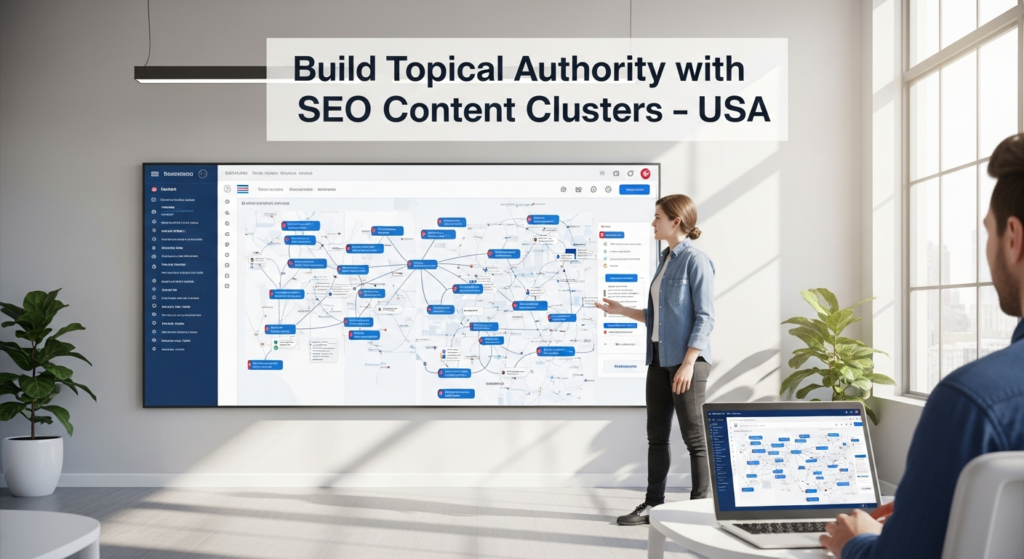
Are your digital marketing efforts struggling to gain traction in a saturated online landscape? Do you find your website ranking for scattered search terms but never quite dominating your niche in search engine results? The missing link might not be your keywords—or even your backlinks—but your overall approach to content strategy. In this definitive guide, you’ll discover how Content Clusters SEO (also known as pillar pages and topic clusters using semantic SEO principles) can help you build undisputed topical authority, skyrocket organic visibility, and attract qualified leads across the United States and beyond. By the end, you’ll understand exactly how to leverage this advanced framework to outperform your competition, enhance user experience, and future-proof your ranking power.
Why Content Clusters SEO Is a Game Changer for International Businesses
Traditional keyword targeting isn’t enough in today’s search landscape. With AI-driven algorithms and users demanding richer experiences, Google’s priorities have shifted towards understanding the full context of a topic. That’s where Content Clusters SEO stands out.
- What are content clusters? They’re strategic collections of related content centered around a key topic (pillar page), interconnected through internal linking, which collectively signals subject matter expertise to search engines.
- Why does this matter? Because modern algorithms (like Google’s BERT and helpful content update) reward semantic SEO—with thematic depth and clear topical relationships—much more than isolated, keyword-heavy articles.
- Who benefits most? International businesses aiming to conquer competitive markets in the United States, where showing up for high-intent queries and building trust is essential.
In fact, according to Moz, top-performing websites increasingly rely on robust topic clusters to maintain first-page visibility and outperform rivals in niche markets.
What Is a Content Cluster? Breaking Down the Core Components
The modern approach to Content Clusters SEO involves creating a central, in-depth pillar page that covers a broad topic, and supporting it with tightly focused cluster pages that answer related subtopics. The magic happens when you use strategic internal linking to connect the content, passing authority and helping users (and Google) navigate your expertise.
Pillar Pages: Your Authority Anchors
A pillar page is an authoritative, long-form resource that comprehensively addresses a primary topic—like “Ultimate Guide to Digital Marketing Services”—and acts as a central hub for your content cluster. It gives expansive coverage of the main subject, touching on all related aspects without going too deep into specific subtopics.
Cluster Pages: Targeted, Deep-Dive Content
Cluster pages are supporting articles or blog posts delving into specific areas referenced in the pillar page, such as:
- SEO Services for Global Businesses
- Social Media Marketing Across Borders
- Reputation Management for Enterprises
- Google My Business Optimization Strategies (see more)
Each of these cluster pages targets a focused keyword or question, answers the user’s intent, and links back to the pillar page. This interconnected structure forms the backbone of effective Content Clusters SEO.
Semantic SEO: The New Era of Search Intent
At the heart of Content Clusters SEO is semantic SEO. Rather than chasing individual keywords, semantic SEO focuses on context, user intent, and the relationships between different but related terms. Tools like Ahrefs, SEMrush, and Google Think can help you uncover semantic relationships and trending queries—essential for mapping out powerful topic clusters.
How Content Clusters SEO Builds Topical Authority—With Real Results
Why is building topical authority with Content Clusters SEO so effective, especially for international businesses in the United States?
- Improved Rankings and Visibility: Interlinking related content amplifies the authority of your pillar pages and cluster content, making it easier to rank for competitive, high-traffic terms.
- Better User Experience: Visitors easily find answers to their questions and related information within your ecosystem, reducing bounce rates and boosting engagement.
- Future-Proof Against Algorithm Changes: Semantic SEO and topic clusters align with the latest search engine updates—making your site less susceptible to ranking volatility.
- Clear Buyer Journey Mapping: Mapped clusters can be tailored to different stages of the customer funnel, nurturing visitors from first touch to conversion.
- International and Local Presence: When combined with local SEO services, content clusters help you rank for both country-level and regional queries.
According to research by SEMrush, websites that implement topic clusters with pillar pages see on average a 40 percent increase in organic traffic within six months—demonstrating how powerful Content Clusters SEO can be for global visibility.
A Step-By-Step Blueprint: Building Effective Content Clusters SEO for Your Business
Ready to put content clusters into action? Follow this actionable, data-driven process—used by leading digital marketing agencies and international brands—to architect your own winning content clusters framework.
1. Identify Your Core Topics and Subtopics
Use SEO tools like Ahrefs, SEMrush, or keyword research via Google to uncover:
- Your business’s primary “broad” topics (e.g., digital marketing services, search engine marketing, local SEO, web design, video marketing).
- Associated subtopics and key questions from customer queries, People Also Ask, and competitor content audits.
Example: A main pillar on “SEO Services” could spawn clusters like search engine marketing, local SEO services, link building, on-page optimization, and content strategy.
2. Create a Pillar Page That Sets the Standard
Your pillar page should be comprehensive (often 2,000+ words), expertly structured, and mapped to all major questions and needs your clients have on the topic. Use clear headings, schema markup, and on-page SEO best practices.
- Link to all relevant cluster topics within the pillar page body. For inspiration, review successful pillar page examples highlighted by Moz.
- Ensure your central page solves high-value queries and is optimized for both U.S. and international audiences.
3. Develop Supporting Cluster Content
Each supporting post should be focused on a single subtopic, optimized with relevant keywords, and designed to support (and link back to) the pillar. For a robust Content Clusters SEO strategy, aim for at least 5-10 cluster pages per topic.
- For “digital marketing services,” clusters could detail social media strategies, content marketing campaigns, web design trends, and video marketing tactics (explore more).
4. Perfect the Internal Linking Structure
Internal linking is the glue that binds your Content Clusters SEO model. Links should be natural, relevant, and always include anchor text related to the topic. Every cluster post links to the parent pillar page—and, where appropriate, to other relevant clusters to reinforce topical connections.
- Use clear, descriptive anchor text for all internal links. For example: SEO Services for International Businesses.
5. Monitor, Measure, and Optimize
Track organic traffic, bounce rates, ranking improvements, and user engagement via Google Analytics and Search Console. Use heatmap tools to assess reading paths and click patterns. Revisit and update your content clusters to maintain their relevance and authority, especially as search trends shift globally.
Practical Examples: Content Clusters SEO in Action
Imagine a United States-based agency expanding into international markets. By deploying Content Clusters SEO, they establish a pillar page titled “Complete Guide to Local SEO Services,” supported by cluster articles on reputation management, Google My Business Optimization, citation building, and customer review strategies.
The result? Higher visibility for both broad queries (“local SEO services”) and hyper-specific searches (“Google My Business optimization in Los Angeles” or “multilingual review management”). Engagement soars, conversions improve, and the agency outpaces competitors relying on legacy, fragmented SEO models.
Common Pitfalls: Mistakes to Avoid When Building Content Clusters SEO
- Choosing the Wrong Pillar Topic: Pillar pages should reflect your core business offerings and real customer intent. Misaligned topics can dilute topical authority.
- Thin or Duplicate Cluster Content: Each cluster should add unique value. Avoid rehashing information—it weakens your site’s authority.
- Poor Internal Linking: Internal links should follow a strategic pattern, emphasizing both user experience and search engine logic.
- Neglecting International Considerations: For global reach, ensure you address geo-specific queries, localization issues, and the nuances of U.S. versus international searcher needs.
- Forgetting About Schema and Structural Markup: Enhancing clusters with FAQ, Breadcrumb, and HowTo schema helps boost rich results and clicks.
Key Things to Know Before You Begin
- Content Clusters SEO leverages pillar pages and topic clusters with semantic SEO and internal linking to build lasting topical authority.
- Strategically structured content clusters not only boost rankings but also enhance user navigation and drive higher engagement.
- International businesses gain a competitive advantage by mapping content to U.S. and global audience search intent.
- Continuous measurement, content updates, and a robust internal linking strategy are essential to success.
Frequently Asked Questions
-
What are the main benefits of using Content Clusters SEO for international businesses?
Content Clusters SEO helps international businesses establish topical authority, improve organic rankings, and reach both local and global audiences effectively. When implemented with strong pillar pages and strategic internal linking, it drives high-quality traffic and builds trust with U.S. and international customers. -
How do pillar pages differ from regular blog posts in a Content Clusters SEO strategy?
Pillar pages act as comprehensive hubs covering broad topics, while cluster pages focus on related subtopics. Both are interlinked in a way that signals expertise to search engines and leads users through your content ecosystem. -
How does semantic SEO improve the effectiveness of topic clusters?
Semantic SEO enables topic clusters to address a broader range of user intents and relevant search queries. This context-driven approach ensures your content ranks for diverse related terms and meets the expectations of international audiences. -
What role does internal linking play in Content Clusters SEO?
Internal linking connects cluster pages to pillar pages and to each other, strengthening topical signals for search engines, improving crawlability, and enhancing user experience throughout the buyer journey.
Next Step: Take Action Today
Ready to accelerate your international growth and dominate your digital space? Discover how Digitalsourcers.com can architect a cutting-edge Content Clusters SEO strategy tailored for your unique needs. Contact our SEO experts today for a free consultation and let’s build your path to topical authority together.
Conclusion
Embracing the Content Clusters SEO approach transforms the potential of your website—from fragmented keyword chasing to a strategic, authority-building powerhouse. By aligning pillar pages, topic clusters, semantic SEO, and internal linking, international businesses can leapfrog competitors, capture more targeted traffic, and provide a world-class user experience for U.S. and global audiences alike. Digitalsourcers.com specializes in delivering high-impact strategies that drive results—combining proven frameworks, the latest data, and hands-on expertise for enduring success.