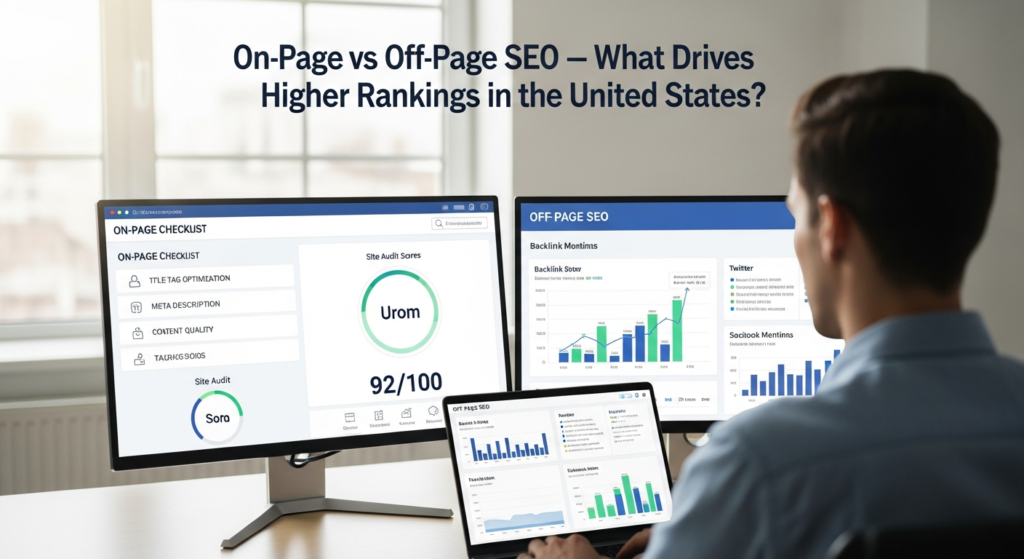
Feeling overwhelmed by the endless advice about SEO, rankings, and Google’s ever-changing algorithms? If you’re running an international business or scaling a service in the United States, one big question keeps popping up: on page SEO vs off page SEO—what actually matters most for higher search rankings? In this comprehensive guide, you’ll discover the crucial differences between on-page and off-page optimization, learn how to balance these strategies for sustainable growth, and get a complete checklist for improving your website’s performance. Whether you’re seeking affordable SEO services or looking to dominate your niche, we’ll give you a data-driven roadmap—actionable, up-to-date, and tailored for real-world business success.
On-Page SEO vs Off-Page SEO: Decoding the Essentials for Better Rankings
Modern SEO isn’t just about stuffing keywords or chasing backlinks. Google’s algorithms have become sophisticated—evaluating hundreds of ranking signals to deliver high-quality results. At the heart of every effective strategy lies the question: on page SEO vs off page SEO, which is more important? The answer isn’t black and white—instead, the most successful businesses master both.
What Is On-Page SEO?
On-page SEO involves optimizing individual web pages to rank higher and earn more relevant traffic in search engines. It covers everything from content quality and target keywords to HTML tags, schema, internal linking, technical health, and user experience. In a nutshell—on-page SEO is what you control directly on your site.
- Well-structured, keyword-rich content
- Title tags, meta descriptions, and header tags
- URL structure and internal links (like to Content Marketing Services or Web Design Services)
- Image optimization and schema markup
- Mobile responsiveness, Core Web Vitals, and fast load times
What Is Off-Page SEO?
Off-page SEO refers to actions taken outside your website to impact your rankings within search engine results. The most important off-page tactic is link building—earning links from credible, relevant websites. But off-page signals also include brand mentions, social shares, reviews, and business citations (think of Google My Business, or Google My Business Optimization by Digital Sourcers).
- Backlink profile quality and quantity
- Brand authority and trust signals
- Reviews and reputation management
- Social media engagement and viral content
- Business listings and local citations
The Difference Between On-Page and Off-Page Optimization
The core difference between on-page and off-page optimization is control. On-page SEO focuses on factors you can tweak on your website, while off-page relies on external validation from users, other sites, and the wider web. Both are essential for SEO strategies for higher Google rankings—but their approaches, checklists, and KPIs are distinct.
Comparing On-Page SEO vs Off-Page SEO for USA Service Businesses
If you’re marketing to US customers, balancing on-page SEO vs off-page SEO is crucial. Local searches, like “plumber near me,” depend on optimized content and business listings (on-page), along with positive reviews and local authority (off-page). According to SEMrush, pages with strong technical SEO and authoritative links outperform those focused only on one area.
Core Website Ranking Factors: How Both Sides Work Together
Google’s ranking algorithm weighs multiple signals. Based on official Google guidance and industry data:
- Content quality and relevance—On-page SEO ensures your content is comprehensive, original, and answers user intent.
- Trust and authority—Off-page SEO boosts your site’s credibility with backlinks and mentions.
- User experience—On-page covers site speed, mobile usability, and technical health.
- Local SEO signals—Combines on-page data (NAP info, landing pages) and off-page reviews/citations.
Best On-Page and Off-Page SEO Strategy for Higher Google Rankings
- Start with a technical SEO audit to fix crawl errors and speed issues (see our SEO Services).
- Develop keyword-rich, user-focused content targeting your core offers.
- Build topical authority through pillar pages and internal links.
- Actively secure high-quality backlinks using content outreach and partnerships.
- Encourage genuine reviews and maintain positive engagement across business platforms.
This dual approach forms the backbone of affordable SEO services combining technical SEO and off-page signals—especially for growing brands in competitive U.S. markets.
On-Page vs Off-Page SEO Checklist for Small Business Websites
Improving website SEO with on-page and off-page tactics doesn’t have to be overwhelming. Follow this actionable checklist to boost your rankings today:
- On-Page: Optimize all meta tags, use schema markup, improve internal linking (linking to client successes), implement SEO-friendly URLs, compress images, and create long-form, intent-focused content.
- Off-Page: Claim and verify your Google Business Profile, solicit reviews, build backlinks from industry directories, join relevant forums, and stay active on social media (or delegate to our social media management team).
For international businesses, remember that link-building standards and local schema may vary by target market. The best on-page and off-page SEO strategy for higher Google rankings adapts tactics to country, language, and competition.
Case Study: Balancing On-Page Optimization and Link Building for Growth
One USA-based client in Digitalsourcers.com’s portfolio improved organic traffic by 141% in six months by balancing targeted on-page optimization (rewriting service pages, boosting site speed, using local schema) and link building (guest posting, local citations, and PR outreach). This real-world example shows how combining both sides delivers real, measurable growth.
How to Balance On-Page Optimization and Link Building for Growth
It’s not a choice of on page SEO vs off page SEO—it’s about prioritizing at the right time. For new or redesigned sites, technical SEO and on-page optimization get you indexed and competitive. As your content matures, actively pursue link building and reputation management (ORM Services can help). Regularly assess your site with a complete SEO ranking guide that audits both internal and external signals.
Affordable SEO Services Combining Technical SEO and Off-Page Signals
Investing in affordable SEO services combining technical SEO and off-page signals is the fastest way to sustainable growth. Agencies like Digitalsourcers offer fully-integrated packages—covering site health, content, backlinks, and local US search factors. Want to see what a blended strategy looks like for your website? Book a personalized review at Contact Us.
On-Page vs Off-Page SEO for USA Businesses: Why It Matters
The U.S. market is competitive and ever-evolving. Google emphasizes both relevance (on-page) and trust (off-page). Most first-page results on Google combine targeted content SEO, well-structured web design, disciplined technical SEO, and robust off-site authority building. The difference between on-page and off-page optimization isn’t just theoretical—it translates into tangible business outcomes.
Key Things to Know Before You Begin
- Both on-page SEO and off-page SEO are essential—neglecting either limits your growth potential.
- Start with a foundation of technical and content fixes, then layer on link building and brand signals.
- Local SEO for USA service businesses requires special attention to reviews, citations, and Google Business optimization.
- Affordable SEO services combining technical SEO and off-page signals deliver the fastest, most stable improvements for small and international businesses.
Frequently Asked Questions
1. What is the main difference between on-page SEO and off-page SEO?
On-page SEO focuses on optimizing elements you control directly on your website—like content, HTML tags, structure, and technical health. Off-page SEO builds authority through actions such as link building, brand mentions, reviews, and external signals from across the web. Both are critical for boosting your Google rankings.
2. For USA service businesses, how should I balance on-page SEO vs off-page SEO?
Start by addressing major on-page technical issues and optimizing your service pages for target keywords, local relevance, and user experience. Once your site is stable and well-optimized, invest in off-page SEO like acquiring quality backlinks, generating genuine reviews, and strengthening your local business presence with directories and review platforms.
3. Can small businesses afford effective on-page and off-page SEO strategies?
Yes! Affordable SEO services combining technical SEO and off-page signals exist for small businesses. Packages can be tailored to your needs—starting with audits, content updates, and gradual link building that delivers ROI. Agencies like Digital Sourcers help grow your business within your budget.
4. What is a practical on-page vs off-page SEO checklist?
An effective checklist includes: fixing crawl errors, optimizing all on-page content, using schema markup, building internal links, ensuring mobile optimization, earning high-quality backlinks, managing reviews, and maintaining accurate citations on business listings like Google My Business.
Next Step: Take Action Today
Want higher rankings without guesswork? Digital Sourcers delivers a customer-first, fair-priced SEO plan that combines technical fixes, content SEO, and credible off-page authority building—backed by professional staff and measurable results for U.S. businesses. Explore our SEO Services at https://digitalsourcers.com/seo-services/ and Local SEO at https://digitalsourcers.com/local-seo-services/, then book a consultation today at https://digitalsourcers.com/contact-us/ to get a tailored roadmap that fits your goals and market.
Conclusion
Understanding on page SEO vs off page SEO gives your business a competitive edge in today’s digital world. By aligning both strategies—optimizing site structure and content while earning trusted links and reviews—you’ll achieve higher Google rankings and lasting online authority. As a global business or a US-based service provider, partnering with Digitalsourcers.com ensures you benefit from an integrated, hands-on approach. Ready to grow? Explore our complete range of digital marketing services and let us help you achieve your SEO goals—locally and worldwide.