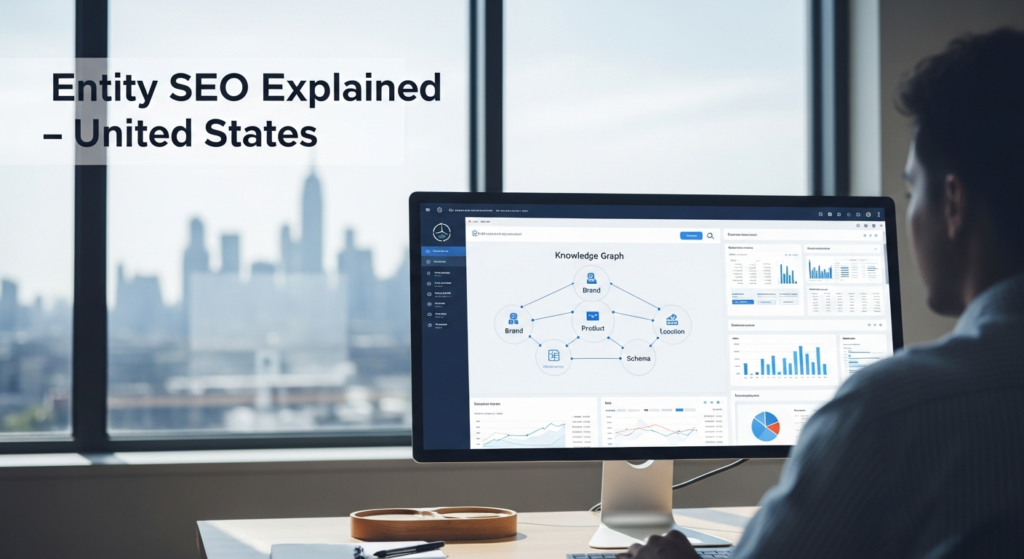
Are your digital marketing results stuck in a rut, despite technical SEO and fresh content? You might be overlooking a game-changer: Entity SEO. With Google’s technology shifting from simple keyword matching to truly understanding the relationships between topics, companies not optimizing for entities risk being left behind. In this definitive guide, you’ll discover what Entity SEO is, why it matters for businesses competing internationally and locally, and how to leverage Google Knowledge Graph, semantic search, and NLP to connect your brand to high-value searches. Whether you’re a CMO or a marketing manager, you’ll find everything you need to future-proof your SEO strategy and drive qualified traffic in the era of semantic search.
What Is Entity SEO? The Evolution of Search Optimization
Entity SEO is an advanced, semantic approach to search optimization that focuses on topics, relationships, and context rather than traditional keyword repetition. An “entity” is any uniquely identifiable thing—a person, place, organization, product, or even a concept—that Google (and other search engines) can distinctly understand and connect in its Google Knowledge Graph.
Traditional SEO relied heavily on targeting specific keywords and backlinks. However, as search algorithms have evolved, engines like Google now use natural language processing (NLP) and semantic technology to understand a searcher’s intent and connect related pieces of information. This shift means that surfacing in top results is no longer just about words on a page, but how those words fit within a broader network of “entities” and relationships. If you want your brand to be recognized as an authority, comprehensive entity SEO is now essential.
Understanding Entities, Knowledge Graphs, and Semantic Search
What are Entities?
Entities, in the context of SEO, are anything that’s singular, unique, well-defined, and distinguishable. For example, “Digitalsourcers.com” (an organization), “United States” (a location), and “Entity SEO” (a concept) are all entities.
- An entity can be a name, date, place, numeric value, brand, or abstract idea.
- Google seeks to identify entities to make sense of all the content and queries it encounters online.
- Entities help Google—and users—associate accurate, rich information with each search.
What Is the Google Knowledge Graph?
The Google Knowledge Graph is a massive database that connects entities and illustrates how they relate to one another. When a user searches for “Marie Curie,” the Knowledge Graph connects her to entities like “Nobel Prize,” “radioactivity,” “France,” and “physicist,” enabling deeper search experiences.
For digital marketing, appearing as a recognized entity within the Google Knowledge Graph can dramatically boost your visibility, E-A-T (Expertise, Authoritativeness, Trustworthiness), and click-through rates.
Semantic Search & NLP: How Google Understands Context
Semantic search means that Google uses NLP to interpret not just the query, but the intent and context behind it. Rather than matching keywords precisely, Google considers:
- Searcher intent: What does the user actually mean?
- Related entities: Which other entities connect to this topic?
- Contextual cues: Geography, current events, previous searches, and more
This evolution was accelerated with algorithm updates like Hummingbird, RankBrain, and BERT. As a result, organizations focusing on Entity SEO are rewarded with better rankings for a diverse set of queries, improved featured snippet opportunities, and stronger local SEO outcomes.
Why Is Entity SEO Critical for International Digital Marketing?
For global brands and digital marketing specialists, optimizing for entities is indispensable. Here’s why:
- Navigating Language and Meaning: In the United States and around the world, the same keyword can have different meanings. Entity SEO, powered by NLP, enables search engines to interpret these differences for better accuracy.
- Cross-Device Consistency: Whether your audience finds you via mobile, desktop, or voice search, entity SEO ensures your brand and offerings appear consistently for relevant queries.
- Enhanced Local SEO: By connecting your business details to recognized entities, you boost your presence in local packs and maps. (Learn more at our detailed local SEO services page.)
- Building Brand Authority Globally: Being referenced as an authoritative entity in the Google Knowledge Graph opens doors to international markets and partnerships.
Data from Search Engine Land underscores that brands optimizing for entity SEO see up to 30 percent increases in non-brand traffic and a 60 percent improvement in long-tail search visibility.
How Does Entity SEO Work in Practice?
Identifying and Defining Your Core Entities
First, list out all unique offerings, services, brand elements, and key personnel that define your business. Each should become an entity Google can connect with your website and digital footprint.
- Example: Digitalsourcers.com’s core entities include digital marketing services, SEO services, search engine marketing, Google My Business optimization, and more.
Structuring Content for Entities and Semantic Search
Entity SEO requires more than just mentioning topics. To succeed, you must help Google recognize their relationships and context. Try these strategies:
- Use clear, expert-driven language and explain how your entities connect (e.g., how “local SEO services” fit within your general digital marketing services).
- Create in-depth, structured content using descriptive headings, bulleted/numbered lists, and FAQs.
- Claim and optimize knowledge panels and Google My Business listings (see full optimization guide).
- Add schema markup to your pages for organizations, products, and FAQs to explicitly define entities for search engines.
Building Entity Authority: Beyond Traditional Links
To become a prominent entity in your space, it’s not just about backlinks. Google looks at:
- How often your brand is referenced around your main entities on reputable sites
- Engagement on social profiles connected to your business entity
- Signals from structured data and knowledge graph associations
- The accuracy and consistency of your listings and information across the web
Practical Example: Entity SEO in Local Search
Let’s say your business specializes in “SEO services” in the United States. To succeed in local and global search, you need to:
- Have an updated, fully optimized Google My Business profile that connects your location, services, and brand entity.
- Ensure your web pages describe your services using precise language, supported by facts, and mention related entities (e.g., states, cities, industries).
- Integrate semantic schema markup to reinforce the connection between your website and these entities.
- Encourage media coverage and customer reviews referencing your core offerings and brand entity.
This multi-layered approach ties all pieces together, enabling search engines to “understand” you and your services beyond just matching words to queries.
Entity SEO Strategies for Digital Marketing Success
1. Map and Audit Your Entities
- Catalog your brand’s unique entities (services, products, locations, awards, team members, etc.).
- Cross-reference with how Google recognizes these entities using Knowledge Graph or free tools like Google’s NLP API demo.
2. Optimize Content for Semantic Search
- Update landing pages, blog posts, and service pages to describe entities clearly, using terms and relationships your target audience expects.
- For example, structure your digital marketing services pages to reflect how each service (SEO, SEM, web design, reputation management) connects as entities within your offering.
3. Implement Structured Data and Schema Markup
- Add structured data (schema.org) for organization, local business, product, and frequently asked questions.
- This allows Google to “see” your entities explicitly and adds you to the wider semantic web.
4. Build Authority with Consistent Brand Mentions
- Gain unlinked mentions in trusted media, industry publications, review sites, and citation sources.
- Ensure consistent NAP (Name, Address, Phone) details across platforms for local SEO impact (learn more at our local SEO services page).
5. Continuously Monitor Entity Performance
- Use analytics tools to track changes in search visibility for entity-based queries.
- Monitor how your business appears in Knowledge Panels and Google Maps.
- Iterate on your SEO services strategy as algorithms and search intelligence evolve.
How Entity SEO Boosts Your Digital Marketing ROI
Investing in entity SEO offers multiple strategic and commercial rewards that go far beyond keyword optimization:
- Higher Search Rankings: Entity-based optimization means your site ranks for a larger variety of relevant, high-intent queries.
- Increased Trust and Authority: Being cited as an authority entity in the Knowledge Graph attracts top-of-funnel and bottom-of-funnel traffic.
- Superior Local and Global Reach: Particularly in the United States, entity SEO supports both local map packs and international discovery.
- Future-Proofing for New AI and Search Technologies: As engines adopt more advanced NLP models, entity SEO ensures your business maintains its competitive search advantage.
Integrating Entity SEO Across the Digital Marketing Funnel
Entity SEO isn’t just for your core website pages. To maximize results, ensure entity optimization runs through:
- Your SEM (Search Engine Marketing) campaigns (discover how Digitalsourcers.com does it)—seamlessly align landing pages to recognized entities for higher ad relevance.
- Content Marketing—publish blogs, videos, and guides that reinforce entity relationships.
- Social Media Marketing—boost your entity’s digital footprint through consistent, branded communication.
- Reputation Management—monitor and respond to mentions across the web to keep your entity’s reputation strong and credible.
- Web Design & UX—design site architecture that makes entity associations clear to both users and search engines.
Key Things to Know Before You Begin
- Entity SEO is about building topic authority and connecting your brand to a web of related concepts, not just targeting keywords.
- Google’s Knowledge Graph and semantic search use NLP to understand both content and user intent, driving more precise and meaningful engagement.
- Structured data and schema markup are critical tools for defining your entities and relationships in a machine-readable way.
- Consistency, accuracy, and strategic content relationships are essential to become a recognized entity in your industry and target markets.
Frequently Asked Questions
- What is the difference between traditional SEO and Entity SEO?
Traditional SEO focuses mainly on keywords and backlinks, while entity SEO is about building semantic relationships between topics, brands, and concepts. Entity SEO uses structured data, NLP, and the Google Knowledge Graph to help search engines understand the meaning and context of your content. - How does Entity SEO impact local SEO?
Entity SEO strengthens local SEO by connecting your business to specific locations, industries, and services using structured data and consistent mentions. This increases your visibility in map packs, local search results, and knowledge panels—key for businesses targeting audiences in the United States and beyond. - Can Entity SEO help international businesses?
Absolutely. Entity SEO bridges language and cultural gaps by tying your brand to recognized concepts, locations, and offerings. As a result, your website and digital presence become more accessible and relevant to international search audiences. - What are some practical first steps to implement Entity SEO?
Start by mapping your main entities, using schema markup, optimizing your Google My Business profile, and updating website content to reflect semantic relationships. Professional digital marketing partners like Digitalsourcers.com can deliver a comprehensive entity SEO strategy.
Next Step: Take Action Today
Ready to unlock the benefits of Entity SEO and take your rankings, visibility, and business growth to the next level in the United States and around the world? Contact Digitalsourcers.com today to request a tailored Entity SEO audit and see how our expert digital marketing services—spanning SEO, SEM, local SEO, and more—can position your brand as a recognized authority in your industry. Let’s transform your online presence for tomorrow’s search landscape.
Conclusion
Entity SEO is the future-proof foundation for digital marketing success in today’s context-driven, international web. By focusing on entities, semantic relationships, and authoritative signals across all your digital assets, you’ll earn stronger rankings, gain recognition in Google’s Knowledge Graph, and connect with audiences more effectively—whether via local or global search. Digitalsourcers.com’s advanced strategies unite technical expertise, creative storytelling, and data-driven insights to ensure your business stands out as a leading entity in your field. Reach out now to harness the full power of entity SEO for your brand’s future.