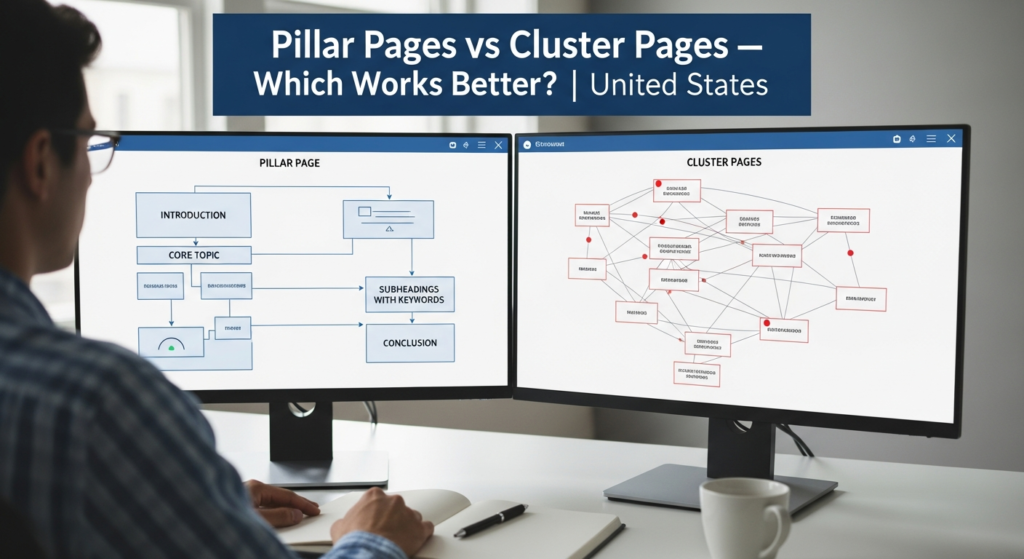
Feeling overwhelmed by the constant debate between pillar pages and cluster pages for your digital marketing strategy? You’re not alone. With Google rewarding well-structured content and user experience, international businesses are asking: which content model drives higher rankings, better conversion, and long-term growth? In this guide, we’ll provide data-driven insights, concrete examples, and hands-on advice to help you compare pillar pages versus cluster pages—and find the optimal content hub approach. You’ll discover how semantic SEO, topic clusters, and internal linking can turn your website into an engine for traffic, leads, and authority in the digital marketplace.
Understanding the Basics: What Are Pillar Pages and Cluster Pages?
The digital marketing landscape is saturated with content, making it essential to build content structures that both search engines and users love. Pillar pages and cluster pages are foundational concepts for effective topic cluster models and organized content hubs. But what exactly do these terms mean, and how do they fit into your overall SEO and digital marketing strategy?
Pillar Pages: The Cornerstone of Content Strategy
Pillar pages are comprehensive, authoritative pieces of content that cover a broad topic in-depth, acting as the main hub within your topic cluster. Think of your pillar page as the “ultimate guide”—it introduces the core subject, provides clear navigation to related cluster pages, and anchors your internal linking strategy.
- Pillar pages are typically long-form (2,000+ words) and target high-level search intent.
- They function as the central content hub within a topic cluster.
- A great example of a pillar page on a digital marketing website would be “The Complete Guide to SEO Services.”
Cluster Pages: Supporting Deep Dives and Long-Tail SEO
Cluster pages are specialized articles or blog posts tightly focused on subtopics within the main subject. They branch out from your pillar pages, exploring specific themes and targeting long-tail keywords.
- Cluster pages provide depth and detail, expanding on topics introduced by the pillar page.
- They support the topic cluster strategy by linking back to the pillar page and within the cluster itself.
- Examples include deep dives like “Local SEO Services for International Businesses” or “How to Optimize Google My Business.”
The Strategy Behind Topic Clusters: Why Structure Matters for SEO
No matter where your business operates, Google and other modern search engines now favor sites that demonstrate depth, organization, and semantic connections across topics. This shift underpins the topic cluster model, where pillar pages, cluster pages, and consistent internal linking work together to improve both user experience and search performance.
Data-Backed Results
According to HubSpot, websites using the topic cluster strategy see up to 3x more organic traffic growth over the long term compared to disorganized sites. When you tie together pillar pages and cluster pages with relevant internal links, you not only build authority but also address multiple stages of the buyer’s journey.
Why Internal Linking and Content Hubs Work
- Internal linking strengthens your SEO by distributing link equity and helping search engines crawl and index your site more efficiently.
- Content hubs, where pillar pages anchor related cluster pages, guide visitors and foster engagement, reducing bounce rates and boosting time on site.
- Topic clusters clarify your expertise, signaling to Google that your site deserves higher rankings for competitive and long-tail search queries.
Pillar Pages vs Cluster Pages: Core Differences and Use Cases
While both are integral to a robust topic cluster approach, pillar pages and cluster pages serve distinct roles. Here’s a practical breakdown of what sets them apart, so you can decide which model to prioritize at each stage of your digital marketing strategy:
| Aspect | Pillar Pages | Cluster Pages |
|---|---|---|
| Focus | Broad, comprehensive coverage of a core topic | In-depth exploration of niche subtopics |
| Length | Long-form (2,000+ words recommended) | Medium-length (800–1,500 words typical) |
| SEO Target | High-volume, competitive keywords (e.g., digital marketing services, SEO services) | Long-tail and conversational keywords (e.g., local SEO services in Chicago) |
| Internal Linking | Serves as a hub, links out to cluster pages, receives links from clusters | Links back to pillar page, occasionally to other clusters |
| User Journey | Entry point, resource center, navigation hub | Problem-solving, specific questions, detailed how-tos |
Real-World Example: Building a Digital Marketing Topic Cluster
Imagine your company offers a global suite of digital marketing services, from search engine marketing (SEM) to content marketing, local SEO, and web design. Here’s how you might structure a topic cluster around your key offerings:
- Pillar Page: “Digital Marketing Services: The Ultimate Guide for Global Businesses”
- Cluster Pages:
- “Search Engine Marketing: Strategies for 2024” (search engine marketing)
- “SEO Services for International Companies” (SEO services)
- “Google My Business Optimization: Local Ranking in the US” (Google My Business Optimization)
- “Local SEO Services for U.S. Markets” (Local SEO services)
Each cluster page links up to the pillar page and among themselves where relevant, forming a semantic content hub. As users navigate deeper, they find detailed answers and actionable solutions—improving satisfaction and search engine rankings.
Pillar Pages: Comprehensive Authority or Content Overload?
Pillar pages command attention—but only if executed well. These cornerstone assets:
- Establish your site’s authority for critical themes (essential for global businesses and competitive industries).
- Enable high-value internal linking, driving flow to conversion-focused cluster pages.
- Help you dominate core keywords—often ranking for dozens or hundreds of related search queries.
However, there’s a risk of “content overload” if your pillar pages grow too dense or lose focus. Data suggests that users prefer sharply organized pillar pages with clear, intuitive table-of-contents navigation—so break up long sections, use frequent headings, and ensure scannability for international readers.
Cluster Pages: Depth, Engagement, and Long-Tail Victory
Cluster pages may seem less flashy, but they’re where the magic happens for long-tail SEO. By targeting specific pain points and search intents relevant to local or niche audiences, cluster pages:
- Attract and convert visitors who are closer to a buying decision.
- Provide actionable insights, tactics, or local expertise—strengthening trust with your target market.
- Increase website dwell time, boosting signals that influence organic rankings.
For example, a cluster page on “How to Optimize Google My Business for U.S. Locations” satisfies a highly targeted intent, while still driving authority to your overarching pillar page on digital marketing services.
Which Works Better? Choosing the Right Approach for Your Business
Rather than an either/or choice, the most successful international brands find balance. Here’s when to invest in pillar pages, cluster pages—or both:
Build Pillar Pages When:
- You want to become the go-to authority on broad industry topics.
- Your site needs a strong, navigational anchor to organize new and existing content.
- You’re targeting global or national search terms with significant traffic potential.
Develop Cluster Pages When:
- You need to address specific buyer questions (“how to improve your reputation online,” “video marketing for small businesses,” etc.).
- You’re tackling less competitive, highly-converting long-tail topics.
- Your goal is to move users from awareness to consideration and decision—answering pain points at every funnel stage.
Combine for Maximum Impact
The data is clear: Businesses that leverage both pillar pages and cluster pages within a tightly interlinked content hub consistently outperform those that don’t. Regularly audit your topic clusters for gaps and opportunities, and ensure all internal linking remains relevant and user-focused.
Key Things to Know Before You Begin
- Both pillar pages and cluster pages are essential for building a successful topic cluster and content hub strategy.
- Pillar pages target broad, high-volume topics, while cluster pages serve specific, long-tail user intents.
- Strong internal linking between pillar and cluster pages enhances crawlability, helps distribute SEO equity, and improves user engagement.
- International brands benefit from this approach by addressing global topics and local nuances, strengthening both reach and relevance.
Frequently Asked Questions
What is the difference between a pillar page and a cluster page?
Pillar pages are comprehensive, central guides covering a broad topic, acting as the main hub for a subject area. Cluster pages dive into more specific subtopics, supporting and linking back to the pillar page within a topic cluster. This organizational method aids SEO, user experience, and authority.
How do I know which topics deserve a pillar page versus a cluster page?
If the topic is core to your business and broad enough for further breakdown, it deserves a pillar page. Subtopics, FAQs, and actionable how-to guides related to the main subject are best suited as cluster pages within your content hub.
Can I have multiple pillar pages on my site?
Yes. In fact, large international businesses often create multiple pillar pages—each anchoring its own topic cluster (e.g., one for SEO services, another for content marketing, and so on).
How frequently should I update my pillar and cluster pages?
Audit key pillar pages and top-performing cluster pages at least twice a year. Update for fresh data, new trends (such as updates to Google My Business Optimization), and evolving user needs. Continuous updates keep both users and search engines engaged.
Next Step: Take Action Today
Ready to transform your digital marketing approach with high-converting pillar pages and cluster pages? Connect with Digitalsourcers.com’s experts for a custom, international strategy built around proven topic cluster models, cutting-edge internal linking, and scalable content hubs. Dominate your niche—request your free strategy session now.
Conclusion
Pillar pages and cluster pages are not competing concepts—they are complementary pillars of a best-in-class digital marketing strategy designed for today’s global marketplace. By investing in structured topic clusters, internally linked content hubs, and robust pillar pages, you position your business at the forefront of industry authority, user satisfaction, and search visibility.
Digitalsourcers.com specializes in creating bespoke, data-driven digital marketing services tailored for international organizations. Whether it’s SEO services, search engine marketing, local SEO services, reputation management, web design, or video marketing—we help you build and scale content hubs that deliver real results. Start now and unlock the power of pillar pages for lasting competitive advantage.