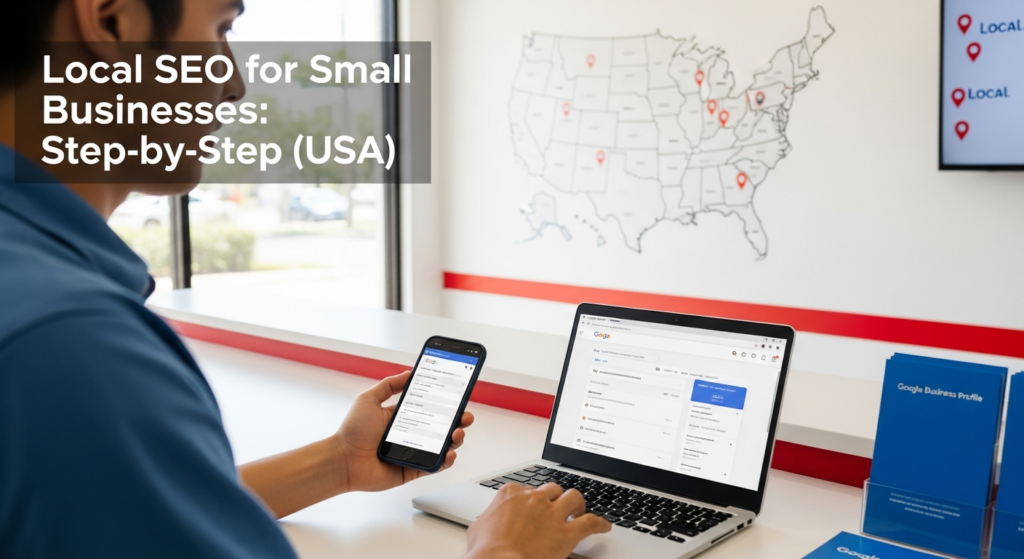
If you’re a small business owner in the United States, the path to growth in 2024 is paved with strong online visibility—especially in your local community. Too often, local shops, agencies, clinics, and service providers struggle to connect online with nearby customers ready to buy. The good news? With a step-by-step approach to local SEO for small businesses, you can stand out on Google Maps, be seen in “near me” searches, and drive both digital and foot traffic. This comprehensive guide outlines exactly how you can harness local SEO for small businesses to increase calls, bookings, store visits, and sales—no matter your industry or location.
What Is Local SEO for Small Businesses and Why Does It Matter?
Local SEO for small businesses is the digital marketing practice of optimizing your online presence so your business appears prominently when people search for services “near me” or include a city, neighborhood, or specific location in their search. For example, if you run a hardware store in Dallas or offer accounting services in Los Angeles, local SEO for small businesses ensures you’re visible to potential customers in your immediate area.
According to a Moz study, 46 percent of all Google searches have local intent. That’s an enormous, high-intent audience seeking everything from restaurants and lawyers to web designers and plumbers—often on mobile, and frequently ready to make a purchase within a day. Without a strong focus on local SEO for small businesses, you risk being almost invisible online, while competitors secure prime digital real estate.
Core Elements of Local SEO for Small Businesses
1. Google My Business Optimization—Your Local Visibility Hub
Claiming and verifying your Google My Business (GMB) profile is the single most important step in local SEO for small businesses. It not only puts your business on Google Maps, but also helps you appear in the coveted “Local Pack”—the group of businesses featured at the top of local search results.
- Provide complete, accurate business information (name, address, phone, hours, categories).
- Add photos of your premise, team, and services.
- Encourage and respond to customer reviews.
- Use posts and Q&A features to highlight offers, events, or FAQs.
For an in-depth process, explore our dedicated guide to Google My Business Optimization.
2. Local Keyword Research and On-Page Optimization
Effective local SEO for small businesses hinges on understanding which keywords your customers use. Tools like Yoast and Google Keyword Planner are excellent starting points. Look for long-tail keywords, such as “best dentist in Miami,” “24/7 locksmith Chicago,” or “coffee shop near Times Square.”
- Integrate these phrases into your titles, meta descriptions, headers, and web copy.
- Ensure your main keyword (such as local SEO for small businesses) and long-tail variants appear naturally across key pages.
- Create dedicated landing pages for each service area or city if you serve multiple locations.
Optimized content helps search engines understand your relevance, boosting your chances of showing up in local search results.
3. Building Citations and Consistent NAP Data
A “citation” is any mention of your business name, address, and phone (NAP) online. Consistency is critical: discrepancies between directories (think Yelp, Bing Places, Apple Maps, Facebook, and niche directories) confuse Google and dilute your local authority.
- Audit existing business listings using Moz Local or similar tools.
- Update and standardize your NAP across all platforms.
- Add your business to reputable, locally relevant directories.
Local SEO for small businesses is powered by both quantity and quality of these citations.
4. Reviews and Reputation Management
Studies show that 93 percent of consumers read online reviews before making a purchase. Positive reviews not only provide “social proof” but are a significant local ranking factor. For best results:
- Promptly ask happy customers to leave a review soon after purchase.
- Respond professionally to both positive and negative reviews.
- Monitor your profile using tools or reputation management services.
Share positive testimonials on your site and social profiles to reinforce trust for local SEO for small businesses.
5. Localized Content Marketing
Content remains king for local SEO for small businesses. Creating blogs, guides, and resources tailored to your local audience strengthens your relevance and authority. For example:
- Publish case studies of projects completed in specific neighborhoods.
- Write about local issues or events tied to your field.
- Create video testimonials or “behind the scenes” features about your team and community involvement.
Link to your digital marketing services page or video marketing offerings to diversify your strategy.
6. On-Site Technical SEO and Mobile Optimization
With more than 70 percent of local searches originating on mobile devices, your website’s speed and usability are vital. Google rewards fast, mobile-friendly sites with higher rankings, especially in local SEO for small businesses.
- Use responsive web design so your site looks great on any device.
- Optimize image sizes and compress files for faster loading.
- Ensure location and contact pages are easily accessible from your homepage.
- Implement clear calls to action—call now, book online, get directions—to convert searchers into customers.
Discover more about our web design services built for local success.
7. Local Link Building and Community Partnerships
Earning high-quality local links can significantly boost your credibility in the eyes of search engines. How?
- Sponsor or participate in local charities, events, or business associations—and get listed on their websites.
- Reach out to local bloggers or news sites for features or interviews.
- Collaborate with complementary businesses for co-marketing partnerships.
The more your business is associated with trusted, local entities, the stronger your local SEO for small businesses results will become.
Step-by-Step Checklist for Local SEO Success
- Claim and verify your Google My Business listing.
- Research local and long-tail keywords relevant to your services and location.
- Optimize all key website pages, meta tags, and content for those keywords.
- Standardize your NAP details across all citations and directories.
- Encourage and manage online reviews to build a solid reputation.
- Regularly publish locally-focused content and case studies.
- Ensure your site is mobile-optimized and technically sound.
- Build local links and foster authentic community partnerships.
- Measure results and adjust strategy using analytics and Google Insights.
For deeper strategies, see our comprehensive local SEO services and SEO services.
Key Things to Know Before You Begin
- Claiming your Google My Business profile is foundational for local SEO for small businesses—it’s free and directly impacts your visibility.
- Consistency in your business listings (NAP) across the web boosts trust with Google and customers.
- Online reviews and localized content are decisive ranking factors for local SEO for small businesses in the United States.
- Mobile optimization is mandatory, with the majority of local searches coming from smartphones.
Frequently Asked Questions
-
What are the first steps in local SEO for small businesses if I have no online presence?
Begin by claiming your Google My Business profile and ensuring your website is live with up-to-date contact details. This lays the groundwork for future SEO efforts. -
How quickly can local SEO for small businesses deliver results?
Most small businesses start to see movement within 30 to 90 days, depending on competition and campaign intensity. Consistency accelerates success. -
Is it necessary to create separate location pages for every city I serve?
If you operate in multiple cities or neighborhoods, unique location pages with relevant content and keywords are recommended for the best local SEO performance. -
How important are online reviews in local SEO for small businesses?
Online reviews are crucial. They influence rankings, build trust, and increase click-through rates from Google Maps and search. -
Can small businesses compete with larger brands in local SEO?
Absolutely. By focusing on local SEO for small businesses tactics—Google My Business, citations, and localized content—even smaller businesses can outrank big brands within their community.
Next Step: Take Action Today
Maximize your growth and local dominance by letting experts handle your local SEO for small businesses. Contact Digitalsourcers.com now to claim your free local audit, get personalized insights, and start attracting more customers from your community. Your online visibility is just one step away.
Conclusion
Mastering local SEO for small businesses is no longer optional—it’s crucial for growth and survival in today’s competitive landscape. By following the strategies in this guide, you strengthen your online reputation, earn higher visibility in local search, and connect directly with customers who need your services now. At Digitalsourcers.com, we specialize in crafting advanced yet accessible digital marketing solutions, ensuring your business stands out, builds trust, and wins within your local market. Whether you need help with technical SEO, content marketing, web design, or complete SEM campaigns, our international expertise leads you to measurable, lasting success.